Data Classification and Retention Policy
Classification scheme by sensitivity, retention schedule by data type, and a secure archival and disposal procedure — the data lifecycle pillar almost no team has documented.

Preview
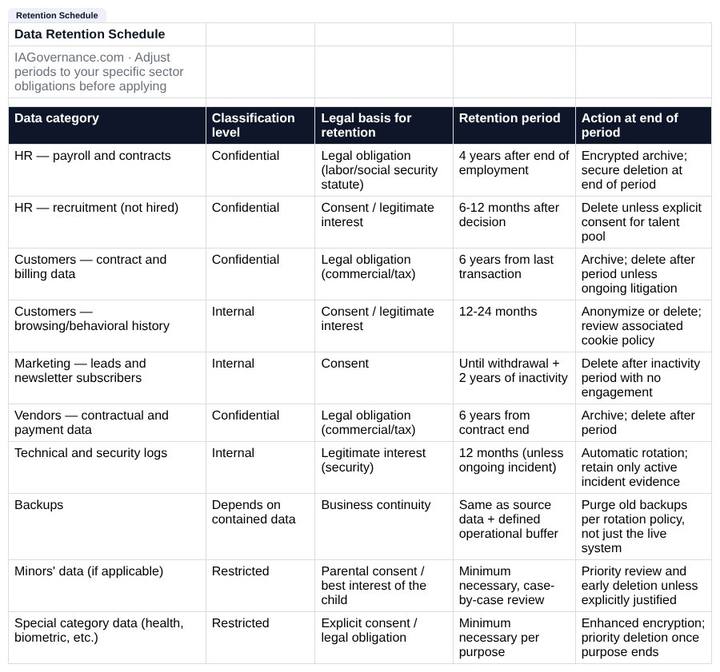
Real screenshots of the file you receive. The full document includes much more content.
What's included
- 4-tier classification scheme (public, internal, confidential, restricted) with objective criteria for assigning each data type to a tier
- Starting retention schedule by category (HR, accounting, sales, marketing, technical logs)
- Archival, purging, and secure disposal procedure, including what to do with backups
- Legal Notice
Why this document exists
Most organizations have a RoPA (what data they process) but haven't figured out how long to keep it or how to dispose of it once it's no longer needed. The usual result is keeping everything indefinitely "just in case" — which is exactly what GDPR prohibits (storage limitation principle) and what multiplies risk in a breach: the more old data you keep without reason, the larger your exposed surface. This policy answers both questions at once: how sensitive is each data type, and when should it disappear.
Frequently asked questions
Why do I need data classification if I already have a RoPA?
The RoPA records what you process; classification determines how protected each data type should be and how long it should be kept. They're complementary.
How long should each type of data be kept?
It depends on the data type and legal basis — there's no single answer. The document includes a starting retention schedule for the most common categories, which you adapt to your specific sector obligations.
Does this replace legal advice?
No. It's a working template that organizes and speeds up implementation, but it doesn't constitute legal advice or guarantee regulatory compliance on its own — see the included Legal Notice.
What format is it delivered in?
Word with the full policy, Excel with the retention schedule by category, and the Legal Notice, as an instant download after purchase.