
Training Data Freshness & Bias
The data a model was trained on doesn't stop aging the day it goes to production. This plan watches for when it stops representing the real world, and what biases it started with.
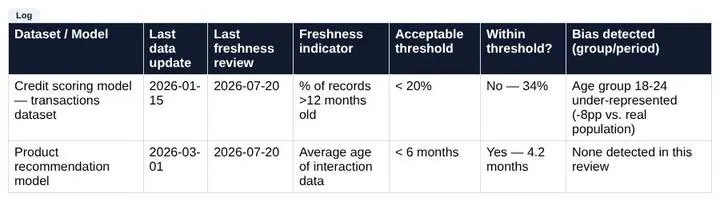 See preview ↓
Before you buy
Check whether this resource fits your task
- Formats listed
- Excel · PDF
- Language
- English
- Indicative difficulty
- Advanced
What is included
- PDF with the freshness monitoring plan: which indicators to review and how often, depending on the domain's volatility
- Bias and representativeness checklist: checks on demographic groups, time periods, and over/under-represented sources
- Excel with a per-dataset log template
- Legal Notice
What you need to complete
- System or model to review
- Metrics, tests or signals to record
- Owners and actions following a finding
Difficulty describes the adaptation work. Review the result with the people responsible for its use.
Preview
Open a sample to zoom in. These are partial views of the file; adapt any examples to your context.
Real screenshots of the file you receive. The full document includes much more content.

What changes with this document
At the «Risk classification» stage of the path
You don't know if a system is high-risk until someone asks.
Documented classification, with fairness testing and a comparison against other frameworks (NIST).
What's included
- PDF with the freshness monitoring plan: which indicators to review and how often, depending on the domain's volatility
- Bias and representativeness checklist: checks on demographic groups, time periods, and over/under-represented sources
- Excel with a per-dataset log template
- Legal Notice
Why this document exists
AI Act Art. 10 requires training data to be "relevant, sufficiently representative and, to the best extent possible, free of errors" — but that assessment can't be done only once, when building the model, and considered settled forever. Data a model was trained on two years ago describes a world that has already changed, and the representativeness it had at the start may have eroded without anyone noticing until a problem shows up in production.
Frequently asked questions
How is this different from the AI Act Art. 10 Readiness Pack?
The Art. 10 Pack covers the data governance documentation required when building the system. This product is the ongoing follow-up: watching whether that data stays representative and current over time.
What does it mean for a training dataset to lose "freshness"?
It means the world that data describes no longer matches the current world. A model trained on 3-year-old data may be making decisions based on a reality that no longer exists.
Does this replace legal advice?
No. It's a technical working methodology, but it doesn't constitute legal advice or guarantee AI Act compliance — see the included Legal Notice.
What format is it delivered in?
PDF with the freshness monitoring plan and the bias/representativeness checklist, plus Excel with a per-dataset log template.
Download and first steps after purchase
After your purchase
- Recover your filesUse the receipt email or open My Orders with the email used at checkout. Open My Orders.
- Extract and readExtract the ZIP if provided, check the included files and read the instructions before editing a working copy.
- Apply it to one caseComplete a small first example with your own context and review it with the responsible team.
See download and first-use instructions · contacto@iagovernance.com
Purchase and refund conditions are shown at checkout and in the buyer terms. Buyer terms.